Would you like to write for us? We are looking for people with a passion for health, green solutions,
and environmental issues that need awareness. If you are interested,
please email us SanusSomes2010@gmail.com.
Showing posts with label health. Show all posts

Saturday, October 22, 2011

What Stage Are You At?


There are 5 stages a person goes through before starting a healthy routine.  If you are having a problem sticking to a routine, learning the 5 stages and identifying where you are may make it easier for you start and stick to a healthier lifestyle.

Somethings gotta change!!
First Stage: Pre Contemplation
At this stage you don’t think there is a need to eat healthier and exercise.  You think everything is fine and you can continue a life of scarfing down junk food and practicing the art of being a couch potato.  You shrug off claims that diet and exercise are good for you and decide to spend you free time in front of the television.

Second Stage: Contemplation
You realize you need to do something. Your weight has gotten progressively worse, and you don’t have any energy. You may be experiencing some health issues and you feel tired most of the time. When you check your kitchen for something healthy to eat, you find the closest thing you have for healthy consumption is water. Still the problem seems too big to handle and you decide to do nothing.

Third Stage: Preparation
In this stage you start collecting information. You call a few gyms for pricing and inquire about healthy eating programs. You may even engage in some sporadic exercise like walking once every week or so. People in this stage are ready to adopt a healthy lifestyle. This is the stage most get stuck in. If you can stay on this path and try to progress to the next stage it will be a big and important hurdle. Starting a routine with a friend is more fun. It’s much easier when you are not going it alone.

Fourth Stage: Action
This is the stage when people engage in a regular routine of healthier living. They exercise several times a week and make healthier food choices. This stage is still new and the routine has not been regular for more than 6 months. It is at this stage that more than half of the people give up and slide back to their old ways. If you can push through at least 6 months it is more likely to become part of your regular routine.  Your body will really show signs of a healthier lifestyle. Having a friend helps a lot in this stage. Sharing experiences, hardships and triumphs with someone else increases the rate of success.

Fifth Stage: Maintenance
By now the body has a routine and eating healthy is something that comes much easier. This happens after 6 months of a daily healthy routine. Regular exercise is craved by the body and you don’t feel right unless you stick to it. Health has improved, energy levels are up and you not only feel better but look better too!


We wish everyone good luck in starting their routine. But it is not luck you need. Your limits are defined by agreements you've made about what’s possible, change that agreement and you can dissolve all limits*. Remember you are never too old, too fat, too out of shape, too weak or too busy to start living a healthy lifestyle, only too lazy!!!


*Dr. Wayne W. Dyer, "Everyday Wisdom"

Written by Joann Agoglia
Edited by Rob Marshall

Sunday, October 2, 2011

A Dose of Reality and A Nugget of Nutrition
Be Leaner and Greener

Reducing your waist line can help you reduce your carbon foot print and visa versa. Take an average lunch for example. Since most of us have a limited amount of time for lunch, quick and simple is the only way to go. This is why the fast food drive thru is always crowded, but it is not the only way. It is simple and sometimes quick, but those are about the only benefits.

Most fast food lunches contain 700-1200 calories. Even the salads! The calories can be cut in half for the salads if you don’t use any dressing and get rid of the croutons. Lets face it, a salad for lunch leaves you hungry in a couple of hours even with chicken or a hard boiled egg. Now take out the dressing and not only is it not filling, but it isn’t satisfying either.

One nights worth of trash at a fast food restaurant.
 Now let’s take a look at the effects on your carbon footprint from that meal.  Everything you order comes in its own wrapping. The sandwich has a bag or a box, and the drink has a cup and sometimes a straw. You may get bottled water, but you need to make sure the bottle is being recycled. If you get a side, that too comes in its own container. It doesn’t matter if it is paper or plastic because neither one can be recycled. Then everything comes in yet another bag. If you have the time to go inside you will be using a tray that has a paper liner that is not recyclable and trays use up water and electricity when being washed. Additionally, your car uses gas to go waiting in line at the drive thru. If it is a nice day you just may have the car windows open until you the smell of the car exhaust gets to you. So you close the windows and turn on the air conditioner or maybe the heat which uses even more gas.

All of this from only one lunch for one person. This is repeated hundreds of thousands of times a day all across the US. What can you do about it?

If you don’t already know, packing your own lunch can be much healthier for you. Compared to a meal at your favorite fast food restaurant (or even you favorite big chain restaurant) your homemade lunch can contain less calories and a bigger amount of food to eat.  If you pack everything in reusable containers just think of all the trash you save from going into the landfills. You may not live near a landfill, but someone does.  We also encourage the use of reusable water bottles. Find yourself a tin drink container. It can go from freezer to dishwasher. If you frequent popular cafes, take advantage of the reusable coffee mugs they always have for sale or try stores like Target for cheaper prices on bigger travel mugs.

Unfortunately the average American produces between 9-10 pounds of trash in just two days and is 17 pounds over weight. It all adds up when you reduce the amount of trash you create on a weekly basis and the amount of calories you consume on a daily basis by taking your own lunch to work! One person can make a difference!  If you have children you are setting a great example for them to follow. They too can pass this good habit down to their children.

If you have a hard time deciding what to bring for lunch, feel free to contact us. Just let us know what you like for lunch and we can come up with a leaner, greener way for you to enjoy your favorite meals.

Written by Joann Agoglia
Edited  by Rob Marshall

Sunday, September 4, 2011

The Super Powers of the Tomato


If you live in New Jersey you are no stranger to the Jersey tomato. We claim to have the best tasting tomatoes in the world. The mixture of sandy and clay soil make ideal growing conditions. You may know that tomatoes are good for you, but good is truly an understatement. You may also not be aware that tomatoes were once considered poisonous.

Those of us who pride ourselves on how good New Jersey tomatoes are might find it hard to believe that the plant originated in South America. The Spanish conquistadors loved it so much that they took it back to Europe with them. Somewhere along the line it became an ornamental house plant and was not considered edible. In fact, because of its distant relation to nightshade (a plant that produces highly toxic berries) it was thought to be poisonous.

Here’s where New Jersey and the tomato come together. In 1820 Colonel Robert Gibbon Johnson of Salem County brought the tomato plant to local farmers. Legend has it that on Sept 26, 1820, he proved tomatoes were not poisonous when he stood on the steps of the Salem County Courthouse and ate a whole basket of the delicious red fruits in front of hundreds of onlookers.  Much to their surprise, the Colonial didn’t die and the local farmers have been growing tomatoes ever since.

Tomatoes are not only great tasting; they are great for your health too! Tomatoes contain lycopene, and lots of it. Lycopene is an antioxidant. This antioxidant flushes out free radicals and protects healthy cells from diseases like cancer. The more lycopene a food contains the more free radicals the body can flush. It is not only the high levels of lycopene that make this fruit down-right awesome for you: it’s the beta-carotene, potassium, magnesium, niacin, folate and Vitamin B6. This combination of nutrients makes the tomato a cancer fighter and a big help in preventing heart disease.  Research shows that men who consume 10 servings of tomatoes a week reduce their risk of prostate cancer by a whopping 45%. Similar studies show similar results for rectal colon, lung, breast, and endometrial cancers. There is even research that indicates tomatoes can help people stay active longer. The fruits and vegetables with the highest level of antioxidants and nutrients are, as usual, organic!

So slice ‘em, dice ‘em, pile them on your pizza or burger. Chop them up and add some extra to your salsa or just cut them in half and add a small amount of salt or eat them just the way they are. My personal favorite is sliced tomatoes with some mozzarella cheese, olive oil, vinegar, basil, and a sprinkle of sea salt top.

Is there a fruit or vegetable you think needs special attention? Let us know your favorites. We would love to write more about the benefits of nature’s market.

Written by Joann Agoglia
Edited by Rob Marshall

Thursday, August 25, 2011

What the Squat?

The squat is a very practical exercise. We do it during our everyday lives several times a day in one form or another. We all do variations of a squat when we get in and out of a bed, a chair, or a car. This movement is also the cause of a lot of back injuries because it is commonly performed incorrectly.

If you can get up from a chair, even if you need assistance getting up, you can do a squat.
If you need help of any kind getting up and sitting down in a chair, then the squat is the exercise for you. Like most exercises, the squat can be modified so that anyone of any fitness level can perform and benefit from it it.

The basic squat:
• Start in a standing position.
• Put a chair behind you. If you normally need assistance getting in and out of a chair make sure there is a sturdy table in front of you.
• Feet should be hips or shoulders width apart.
• Your weight should be in your heels. If you find this hard to do lift your toes (just your toes) up.
• If you don’t need assistance put your arms straight out in front of you or cross them in front of you with hands on opposite shoulders. If you need assistance put your hands on the table.
• Bend your knees and push your butt back towards the chair.
• Your knees should be over your ankle and should not go past your toes.
• Slowly lower yourself down into the chair
• Coming up is the same as going down (only in reverse).
• Feet and knees hips or shoulders width apart.
• Weight in your heels, toes lifted if needed.
• Lean your shoulders forwards slightly.
• Press weight down into your heels.
• Slowly straighten you knees by lifting your butt up and pushing your hips forward.

Once this becomes easy you can do the squat in a lower chair or bench. The next progression would be to do it without a chair or bench. After that you can start adding weight. Start by holding a 5lb weight in each hand. Let your arms hang at your side. Remember this is just to add weight to your body so your arms should not move, keep them as still as possible.

This is just one way to start and progress this exercise. As always if your are unsure about this or any exercise you should consult a professional. We are always happy to answer any questions you may have. Happy squatting.


Written by Joann Agoglia
Edited by Rob Marshall

Thursday, August 18, 2011

Are you long and hard or short and stiff?


There are three key elements to a well rounded workout: cardio, strength training and stretching.  Cardio is probably the most popular.  When most people think of getting fit they turn to some sort of cardio exercise. They begin a running or walking routine, join a class and do kickboxing, dancing, or boot camp. But cardio is only 1/3 of a successful exercise routine. Strength training and stretching are important for the health of your muscles. You need both of these added to cardio to execute a good workout.

Strength training needs stretching. Typically men have no problem strength training but are reluctant to stretch. I have been told it is because they feel that it takes away for the bulk they have tried so hard to build up during training.  Women on the other hand are reluctant to strength train because they do not want to bulk up. They are more likely to take a yoga class then to start strength training. In one of my previous blogs I wrote about how important it is to strength train. This time I feel the need to talk about stretching. So many people not only don’t stretch but don’t know how to stretch.

Without stretching, your muscles become short, stiff, and brittle. Joints become very limited in movement and start to ache. No one wants to workout when they are feeling achy. When you add stretching to your routine your range of motion (ROM) gets bigger.  Your joints are not as stiff, which reduces soreness. This also helps prevent injury during your workout and in everyday activities. When your muscles and joints are flexible you can move about more freely. A wider ROM is important to weight lifting, as well. You use more muscle fibers when you expand your range, and when you use those fibers, they make the muscles stronger. Stretching also makes the fibers longer and gives you iron pumping hard bodies more room for bigger muscles.

Stretching also helps improve circulation, decrease muscles tension and improve your body and mind’s ability to relax. Poor posture often comes from the chest muscles being too tight.  Just think of gravity pushing down on us all day, putting pressure on our shoulders.  After a while, the shoulders start to slump forward and create weak back muscles and short, tight chest muscles. Stretching those muscles out can improve your posture and reduce back pain.

Stretching is a very natural thing.  If you have a dog or cat, watch them after they wake up.  The first thing they do is stretch.  Where do you think the yoga poses "downward dog" and "cat stretch" come from?  My dog actually stretches before she plays her favorite game of fetch with my son.

Like everything else in fitness, performing a stretch has to be done correctly and safely to be effective.  If you have any questions on how to stretch properly you should consult a professional.  We are always more than happy to answer any questions you have.


Written by Joann Agoglia
Edited by Robert Marshall

Tuesday, August 16, 2011

Farmers: Today's Indentured Servants


Farming has never been an easy living to make. Before heavy machinery was manufactured, farmers plowed, planted, weeded, and harvested by hand. They could eat their crop, but they still needed to sell enough (mostly at local markets) to pay their bills. Plots of land would yield only so much food, but it required long hours and dedication. Despite the hardships, farmers were a proud group dedicated to their charge, and because of their agricultural endurance, America has been able to thrive.

The face of farming has changed drastically in the past 50 years. Machines do much of the manual labor. Herbicides do the weeding, and pesticides (modified nerve gas like DDT) protect crops from insects. Seed providers have been bought up by chemical corporations to become hubs for genetic engineering. Food has transformed, and it now travels farther than ever before. Fields yield 300% more than even 30 years ago. The farm has become efficient, but at what cost? Are farmers finally able to sit back and relax? The truth is that they cannot. In fact, the farmer’s life has recessed to the likeness of the indentured servant.

An indentured servant is a person that works for food and shelter (sometimes up to 7 years). They usually do not get paid wages, but they survive. This is the life of the 21st century farmer. Through subsidy programs, debt, and constant harassment from Genetic Engineering corporations like Monsanto, farmers are barely able to get by.

The government subsidizes four major crops grown in America. Corn is one of them, and it has become a source of controversy in recent years. Today’s corn is not the corn of 100 years ago. It has been modified by Monsanto and other corporations to resist chemical sprays sold by the same group (Round-up, anyone?). The cost of seed, chemicals, machinery, and fuel makes the cost of producing corn extraordinarily high. One bushel of corn costs the farmer $3.20. The net return is only $2.20, which creates a loss of $1. How can farmers continue if they do not make money? The answer is subsidies. The government gives farmers money for growing corn (no matter what corn it is). To get as much profit as possible, farmers buy the cheapest and easiest corn seed they can. However, their profits are once again snatched away by the chemical sprays they have to use on their fields and the fuel they need to power their machines. Using wheat as an example (it follows a similar parallel to corn), the $1.50 you spend on bread at the store will reach the farmer as a mere profit of a single nickel after the retailers get their hands on it. Even then, that nickel is up for grabs for the chemical and seed corporations.

There are other problems out there for farmers: cross-contamination. Corporations like Monsanto and many others have been allowed to patent genetic material (plant, animal, and sometimes human) since 1978. Under patent laws, they have the right to sue anyone that possesses their genetic material without a license even through unwanted cross-pollination. Many lawsuits have been made against famers large and small by Monsanto for illegal possession of patented material, and in all cases Monsanto is backed by the government, forcing the farmers to settle out of court or go bankrupt trying to fight the suits. Consequently, the farmers are forced to destroy stored seeds,which are sometimes hand-developed by families for over 100 years, in case they are contaminated. How could the government allow this to happen over and over without any resistance? Perhaps it is because the same people who work for the government also work for Monsanto.

Linda Fisher
Exec. VP for Monsanto
Deputy Admin. for EPA
Justice Clarence Thomas
Monsanto Lawyer for Regulatory Affairs
Supreme Court Justice
Micky Kantor
Board of Directors, Monsanto
Secretary of Commerce
Lidia Watrud
Biotech Researcher, Monsanto
EPA
Anne Veneman
Board of Dir., Calgene,
Purchased by Monsanto
Sec. of Agriculture
Michael Friedman
Senior VP, GD Searle,
Division of Monsanto
Acting Commissioner, FDA
William Ruckelshaus
Board Member, Monsanto
Chief Admin., EPA
Donald Rumsfeld
President of Searle,
Subsidiary of Monsanto
Sec. of Defense
John Ashcroft
Received largest campaign contribution in 2000 election from Monsanto
Attorney General

Where does this leave today’s farmer? Today’s farmer has become the modern day servant to corporate profits. They are an endangered group. The only way they can survive is if we, the consumer, educate ourselves and buy locally from organic farmers. Some people may not believe it, but the consumer ultimately controls the market. If we persuade a movement towards truly organic food and away from genetically engineered crops, we can bring the farmer back from the edge.

Written by Robert Marshall
Edited by Joann Agoglia

As always, if you have any questions or comments, please let us know.

Saturday, August 13, 2011

Recipes for the Health Conscious but Clumsy Chef
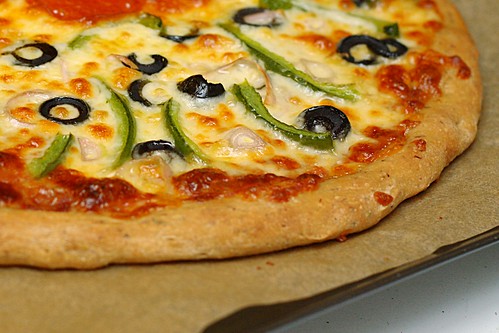
Quick and Easy Whole Wheat Pizza


2 cups whole wheat flour
1 tablespoon or one packet of yeast
3/4 teaspoon salt
1 cup of hot water
1 tablespoon olive oil
1 tablespoon raw sugar*


  1. In a big mixing bowl, combine whole wheat flour, yeast, and salt.
  2. Add hot water, olive oil, and sugar.
  3. Stir until it has a doughy consistency.
  4. Let the dough sit for 15-30 min. It all depends on the room temperature. I found that in the winter it takes the full 30 mins, but in the summer it only takes 15 min. 
  5. You can roll the entire thing out to create a 16 inch pizza, or split in half to make two 8 inch pizzas.
  6. Add toppings. Our favorites are mushroom, garlic, peppers, and onions
  7. Bake at 425 degrees for 17 min.

 All ovens are a little different so check after 15 mins. You may need to leave it in closer to 20 min.

You can make extra and freeze it to use at a later date. Make sure when you freeze it that the bag or whatever you freeze it in has some flour in it so the dough doesn't stick. Or you could just make sure the dough is floured. If you freeze it in a bag, keep the bag open to give the dough space to rise.when defrosting it.  

Enjoy! Remember if you have any question or comments please let us know.

*Yes, there is sugar. Sugar is needed to fuel the yeast which makes the dough rise. After the yeast uses the sugar, it is metabolized into a gas!

Friday, August 12, 2011

A Dose of Reality
Mac and Cheese: The Other White Meat

A long time friend of mine had a Facebook post this week that drew a lot response. Normally this is no big deal. His posts are pretty popular. The first few words “Colin” and “school” caught my eye. I thought it was another charmingly funny post about his son Colin. I, not unlike many others, love to hear about his grade school experiences. My favorite being the picture of his butt he drew in school that the teacher didn't quite appreciate. Anyway, this time it was a note about the upcoming school year. According to Sean it read, “In order to comply with state and district nutrition policies we no longer permit celebratory snacks for birthdays or class parties.” Almost immediately the comments stated pouring in. They all had the same tone. People stated how fed up they were with the state and government stepping in to fix a problem with the wrong solution. I have to admit my views are not much different.

I remember back in the day celebrating birthdays and holidays in school. I would bring less for lunch on those days because I knew I would be eating all the yummy cookies and cakes the moms brought in. I also remember going outside for recess and running till I couldn’t run anymore. Today, recess is much more structured. Some schools feel it is necessary to organize play time in order to get all of the children moving. It is true that kids don’t get out and play enough because television and Xbox keep them occupied most of the time. Let’s face it. It is not just the kids that are occupied by the flat screens. So are the adults. The truth is we all need to move more. We all need to spend more time away from our computers, TVs, and video games, but that is only part of the problem.

We get angered when the state imposes rules on us especially when it regards our children. When it comes to kids’ health, there is no one in the world that has a child’s best interests in mind more than the parent, and we don’t need the government to step in to force rules on us. The politicians need to learn how to do their own jobs before they start telling us how to do ours. So when the school district sent that letter home regarding celebratory snack food, I felt that the government was fringing upon our rights once again.  But before I started to bash this policy, I needed to see just what the states position on nutrition was.

This is protein according to the USDA.
Reading the USDA’s policy on the school lunch and breakfast program is very taxing. It is 78 pages long, and it covers not only the dietary requirements as defined by the USDA but the cost of EVERYTHING, which is understandable. As I read past the first 10 pages, I kept thinking that nutrition doesn’t have to be this hard. Then I realized this is the government and everything really does have to be this hard. Everything needs to be worded so that maybe, just maybe, you will get tired of reading (as I did), and just give in (which I didn’t). I started to sift through the crap looking for what the USDA thought was nutritionally sound food. A few things caught my attention. I was reading the daily recommendations of fruits, vegetables, whole grains, meat and meat alternatives, fluid milk, calories, and saturated fat from calories, sodium, and trans fats. It all sounded good. Then I got to the definitions of whole grains and fruits. A whole grain was defined as whole grain rich.  It said nothing about being 100% whole grain or made with 100% whole grain flour. If you have not read our blog on White Bread vs Wheat Bread, you may find it interesting to know that if a product only says whole grain, it may as well be made with white flour.  In turn, whole grains can equal a lot less nutrients and empty calories. The same concept applies when they talk about enriched macaroni as a substitute for protein. Yes, you read that right. Enriched pasta can be used as a source of protein. But its white pasta we are taking about here, and it goes through the same process as white bread because it is made with white flour. Then they put nutrients back in to make up for what they took out. Doesn't make much sense does it? It just equals more empty calories. Then we come to the fruit requirements. Fruit doesn't always have to be fruit.  Fifty percent of the daily requirement can be in juice form. We also did a blog on that. Once you remove the juice from the rest of the fruit, you remove the sugar from the nutrients that help your body digest, utilize, and properly dispose of the sugar. This is why a diabetic can drink orange juice or eat a piece of candy when they are low in sugar. It is absorbed quickly into the blood stream. There was no mention of water intake. We did a blog on that too! Water is one of the basic things the body needs yet not one word about it in any of the 78 pages.

It seems like a good portion of the requirements are based on calories. Americans have been counting calories for at least 50 years and we have gotten fatter every since. If you go by this standard some of the healthiest breakfasts would not stand up to these requirements, but some of the crappiest breakfasts would pass. Example: the following breakfast would not be enough caloric intake even for a kindergartener

1extra large egg
2 pieces of whole wheat toast
8 oz glass of milk
15 grapes
Total 340 calories

If you take this same meal and substitute the nutrient rich whole wheat bread for the empty calories in white bread and add 1 slice of bacon (assume this could count as protein even though it is the fat of a pig) then maybe it would an acceptable breakfast for K-5. My kids would never have eaten this much for breakfast at that age. Then, we would have to add another 100 calories for the grades 6-8 and another 200 for the high school kids.

Then of course we come to the center of all the FB comments: the state’s policy on foods with minimal nutritional value. It is called Title 7. You can read the whole thing on our FB page. From what I can figure out chocolate is still ok if it doesn’t contain corn syrup. I find that strange because a lot of enriched foods like bread have corn syrup in them.  Soda is a no go but not because it contains loads of sugar but because of the carbon dioxide. Water ice is not expectable unless it contains fruit juice (I believe we covered the whole fruit juice thing) or real fruit. So I don’t know how Rita’s was allowed into the school lunch room last year.

I could sift through this policy for hours and find more problems with it, but the bottom line is that the state doesn’t need to tell us how to feed our kids. The government loves to put band-aids over bleeding wounds. The reason the government changed the policy on the school lunch programs is because they wanted to make fruits and vegetables more available in school meals and to help fight the obesity problem that plagues America. So they make it appear like they care by imposing regulations on schools (who are already stretched by budget cutbacks) about what they can or cannot serve and what parents can or cannot bring in to the classroom. Meanwhile big business gets to brainwash our kids by constantly bombarding them with ads and images everywhere you look.  It’s not just enough to limit the TV and computer time. You would have to keep them isolated from them completely. How about a drive down the road just passing a fast food joint? You can’t escape the oversized advertisements. And forget about taking them to the super market. The focus on kids is ridiculous with movie characters on the box, toys inside, chances to win computers or an Xbox, etc. Then they hit you with the 1/3 less sugar or no sugar added so you feel good about buying it. But what you may not know is that a favorite trick of the trade is to make the portion size smaller so the 1/3 less sugar refers to sugar per serving size and the no added sugar means they added a new kind of chemical sugar to keep the taste sweet. The snack food today is nothing like it was 20-30 years ago. The food today is grown from seeds that are genetically engineered with things that don’t have to be proven safe for human consumption. The meat that is served in fast food restaurant and big restaurant chains, even the meat we buy in the super markets, is loaded with hormones. It won’t say so on any food label or warning because the corporations responsible for this food don’t have to tell you if they inject their meat with hormones. The government agencies that are supposed to regulate what goes into our food are run by the same big business that make and grow the food. The same people who run corporations that grow genetically modified foods in this country are the same people who run government agencies like the FDA and the USDA. Each year they change jobs and bounce back and forth from the corporations to the government positions. It is like a game of musical chairs only no one is left standing. They all have a seat at a new job: different position; same crap.

So you are right, all you angry posts on Sean’s FB comment, the state should not be poking their nose in what we feed our kids.  We need to protect our children from the government. I urge everyone to become an avid label reader and find out what is really in that food you are feeding your family. It may take time, but it is time well spent. Nothing is more important than the health of your family. When things break, like your car or something in your house, they can be replaced or fixed. It may cost money, but it can be replaced. It is not so easy to replace good health. Once it is gone it can be very hard to retrieve. You may need the help of a professional. With all the pitfalls and food traps on the market today, it is understandable that the average person would need help with such an important issue. Let us know if you have any question. We are more than happy to offer our assistance!

Written by Joan Agoglia
Edited by Robert Marshall

Friday, August 5, 2011

Recipes for the Health Conscious but Clumsy Chef
Hummus

Hummus can be used for any meal!
When we first made the commitment to eat healthier and live greener we often felt like we couldn't eat anything. It was very frustrating. We like to be active and love to hike, and when we can't, we walk or ride our bikes. When we do go on a hiking trip, the hike usually lasts all day. With all of this activity we need food. I mean real food. Most people thing we eat salads all the time, but that is far from the truth. We need protein and carbohydrates to keep us going. We decided that we needed to make our own food. By making our own food we don't have all of the chemical preservatives and additives that store bought, prepared food has. We needed recipes that were quick and easy. When I say quick and easy, I really mean it. I am horrible at cooking, and I didn't want Rob to shoulder the responsibility of making most of our meals. I needed a recipe with no more than 5-6 ingredients and as few steps as possibles to put those ingredients together. Any more than that and I could swear that the room starts to spin, and I feel like I am reading another language. Rarely is there a time in the kitchen (even today) when I am preparing a meal that I don't burn myself or cause a finger to bleed.  So for all of you who find it an accomplishment to make an edible peanut butter sandwich, there is hope. All of these recipes that we will be posting have been successfully made by me. I know they are a success when people go back for seconds instead of drinking large amounts of water during the meal or search the cabinets for something to eat immediately after dinner. If you have any questions about this or any of our recipes, please feel free to ask. If there is a mistake to be made with any of the recipes chances are I have already made it, and I can help. Here is one of the first things that I made that actually tasted good. Enjoy!


Hummus
  •  4 garlic cloves, minced and then mashed
  •  2 15-oz cans of garbanzo beans (chickpeas), drained and rinsed
  • 1/3 cup freshly squeezed lemon juice
  •  1/2 cup water
  • 1/4 cup olive oil
  •  1/2 teaspoon of salt
  1. You can use a food processor, a blender, or just smash the beans with a potato masher. 
  2. Add the garlic, lemon juice water and olive oil. Mix together until smooth.
  3. Add salt to taste. 
I sometimes I add canned tuna or tomatoes to this. You can use this as a dip or in a sandwich. Spreading this over a couple of slices of tomatoes in between two pieces of whole wheat bread is a great lunch or dinner. The chickpeas are filled with protein and, since we don't eat a lot of meat, this is a great way to get our protein.


Recipe by Joann Agoglia

Thursday, August 4, 2011

A Nugget of Nutrition
MSG

MSG
MSG, or monosodium glutamate, is basically a salt-amino acid used as a flavor enhancer. The main compound of MSG was isolated by Kikunae Ikeda in 1907 in Japan and was then manufactured by the Ajinomoto company (translates in to “essence of taste”). It was introduced to America in 1947. It is popularly known to exist in Chinese food (in fact, bags of MSG can be bought in China Town in Philadelphia). MSG is also used in many fast food products, as well as beef jerky, soups, seasonings, sauces, bouillon cubes, candy, and more. After all, how else can a company make cheap food taste good?

Glutamic acid is a naturally occurring, non-essential amino acid. Non-essential means that the body actually produces it. It creates a “reward” effect in the nervous system (not just on the tongue). It is found in other food sources like protein products (meat), protein shakes, and even seaweed. To make MSG the Glutamic acid is put through an enzymatic process. This process separates free glutamate which is later added to food in concentrated form. MSG contains 99.6% L-Glutamate, or free glutamate. The concentrated glutamate, a food processor’s “taste enhancer,” is what causes complications in the nervous system. Free glutamates also affect the food craving response. Have you ever felt hungry again after eating Chinese food? It is probably the MSG.

MSG, specifically the large amounts of free glutamate, has been linked to migraine headaches, food allergies in children, obesity, and hyperactivity. MSG’s link to neuron activity suggests that it can aggravate or encourage neurological disorders like Alzheimer’s, Multiple Sclerosis, Parkinson’s, and even Autism. There is also information that suggests that MSG may cause brain and nerve damage and reproductive disorders. Similarities can be seen when a person uses cocaine or heroine. The drug increases hormone levels in the body which creates a reward response, but the huge influx depresses the nervous system and stresses the body.

Since the rise of health concerns, food processors have found ways to hide their free glutamates. This means that MSG has not disappeared completely just because you don’t see it in the ingredients! It still hides under many other names (like that tricky sugar). Let’s cover some new names for free glutamates.

Glutamic acid
Glutamate
Monosodium glutamate (MSG)
Monopotassium glutamate
Calcium glutamate
Monoammonium glutamate
Magnesium glutamate

Natrium glutamate
Anything that is “hydrolyzed”
Any “hydrolyzed protein”
Calcium caseinate
Sodium caseinate
Autolyzed yeast
Gelatin


 So how do we avoid consuming processed glutamates? It comes back down to reading food labels! It is not enough for a product to say “No MSG” because companies have labeled like that before yet still included ingredients that contain free glutamates. Also, remember that glutamates have their place. It is the overconsumption of glutamates that has negative effects on the human body. And, as always, it is easiest to avoid additives and chemicals by buying locally grown produce!

If you have any questions or comments, please let us know!

Written by Robert Marshall
Edited by Joann Agoglia

Resources:

Monday, August 1, 2011

A Nugget of Nutrition
Do you have a toxic relationship?

Have you or anyone you know gone hungry or skipped a meal with the hope that you will lose weight?  Or maybe you have heard about substituting a shake for a meal.  It seems ok since the shake advertizes that it has all the vitamins you need, but usually that just leaves you hungry and obsessing about your next meal. When most people hear the word “diet” they usually groan and think of hunger and being deprived.  They think, “Well, I guess I won’t be enjoying my favorite foods for a long while. Nothing but salads for me.” All of a sudden you find yourself watching what everyone else is eating. If you have kids, especially a teenage boy, they seem like a bottomless pit; consuming anything and everything in their sights without gaining an ounce. You may even find yourself talking to food that you crave. “Goodbye chewy, chunky, delicious chocolate chip cookies. Farewell big, giant coffee frappaccino thing with the smooth whipped cream and the sweet chocolate drizzle. So long my comforting bowl of ice cream at night. No more late night movies for us.” It is like a love affair.

For many of us this is food we have given years of devotion to.  I gave mine a name. I call it my BFF: my best favorite food. Unfortunately, this love affair is toxic. Sure your BFF may call to you in a soft voice and whisper sweet nothings to you from the kitchen. And it tells you exactly what you want to hear. So you give in to your BFF. It makes you feel happy and warm inside and everything seems wonderful for a while. Then your BFF goes behind your back (or in this case in your stomach) and doesn’t exactly return your devotion. The love you have given it doesn’t seem to be enough so it seeks other places to get attention. It starts a very public love affair with your hips, thighs, tummy area or even your butt. Sometimes it is sneaky. It hides in your arteries and gives you high blood pressure. Either way, it puts a real strain on your heart. You know you have to put an end to this relationship no matter how good it may seem at times, but how?

The reason why conventional diets don’t work is because they don’t address the real problem: the toxic relationship you have with food. Most diet plans expect you to wake up one morning and completely change what you eat. They may ask you to count points or calories, but these plans ask you to become even more obsessed with your food intake. A habit that you have had for years will not change over night. You may be able to stick with a conventional diet for a while. You may even lose weight, but sooner or later you go back to your old habits. It is like quitting cold turkey. For some people it works but not many. Studies show that fewer than 5% of people who quit smoking have done it cold turkey.  Studies also show that that number is pretty consistent with the percentage of people who lose weight and keep if off with any of those conventional diet plans. Changing a habit is easier when you replace it with another habit. But unless you fully understand why you should break a life long habit, chances are the new habit won’t stick.  In other words, if you don’t understand why you need to find a new BFF then you will always go back to your old more comfortable BFF. Why? Because it’s easier and familiar, and when things get tough people, tend to go back to what’s more comfortable.

So how do you let go? Your whole thought process about food has to change. The first thing you should do is not think diet. Since diet has become a bad word and is usually something people don’t expect to do forever, you need to think healthier eating. You may even have to change the way you think about healthy eating. A friend of mine once described the healthy food my partner and I eat as grey. I believe he may have been referring to the way it tasted to him. His taste buds were too clouded by the sweet and over-processed foods he was eating.  Then his thoughts changed about the food he was consuming.  It was about the ethical treatment of animals that helped him end his fast food addiction. After that he started to question all of his food. “Where does it come from? How is it made and grown?” He took a very green approach to healthy eating and bought better food. Now he eats much healthier and really enjoys eating and preparing his meals. This is a big change. He never liked or even wanted to cook before. I don’t think he would describe his food as grey, anymore. As a matter of fact, I heard him refer to a cucumber basket that he recently won as “a good time”. He lost 25lbs this summer and gained a new perspective on food. Way to go Mike!

Everyone is different so everyone will have their own reason for changing their eating habits. You have to be just as connected to those reasons as you are with your BFF.  It doesn’t happen over night. It’s a gradual thing.  Your healthy eating habits shouldn’t leave you hungry or feeling deprived. You should never watch others eat and feel like you are missing out. Your new way of eating should be all about adding healthier things to your life. You new BFF should love you as much as you love it. It should be delicious. It should whisper sweet nothings to you and leave you satisfied. It should be something your mind and body love equally. It should be something that is nutritious; something that is willing to give its all to you without looking elsewhere for attention. After all, isn’t that what a healthy, long lasting relationship is all about?

As always, if you have a question or comment about this topic, please let us know.

Written by Joann Agoglia
Edited by Robert Marshall

Tuesday, July 26, 2011

A Nugget of Nutrition
Water vs Your Sugar Daddy

Water is vital for human function, even more so than food. As a general rule of thumb, a human can survive 30 days without food before succumbing to starvation, but the same human will only survive for 3 days without water. Why is it so important? Water makes up 70% of our blood. It uses water to carry oxygen throughout the body. Cells die without it, and when cells die, organs stop working. Water is a big part of the immune and digestive systems, too. Without water, digestion and waste removal would stop. Along with that, you can say good-bye to the nervous system. Well, let's just say that all hell breaks loose in your body.

In this Summer heat wave, it is more important than ever to stay hydrated. CNN stated that there are more heat related deaths each year than any single natural disaster on average in the U.S. In past years, numbers have hit 150. This year alone has already reached 33 according to the NY Times. Experts say this will be the hottest Summer on record.  When was the second hottest? Last year.

Each restaurant chain and coffee house seems to have their own way of cooling you off. Smoothies, shakes, and iced coffees are everywhere! While these drinks may feel like a great way to cool down, the truth isn't always as sweet. You have undoubtedly seen the commercials: people having fun, enjoying the beach, bright colors and music, refreshing fruit. This is a parlor trick. These companies learned a thing or two from Houdini, and now they distract customers from what they are really consuming. When all your body wants and needs is water, McDonald's and friends are giving you this:


(All drinks are medium sized.)


Caramel and Mocha Frappe
Sugar 71g Calories 550
Mango Pineapple Smoothie
Sugar 60g Calories 270
Strawberry Banana Smoothie
Sugars 54g Calories 260

Double Chocolate Chip Frappuccino with no whip cream
Sugar 57g, Calories 406
Caramel Macchiato w/nonfat milk
Sugar 35g  Calories 224
We would like to hear what your favorite cold drinks are! Please leave a comment especially if you have any questions about what you've been drinking.

Written by Joann Agoglia
Edited by Robert Marshall


Thursday, July 21, 2011

A Nugget of Nutrition
The meal that you should never miss

Picture this: It's the beginning of spring. A man walks out to his garage and wheels out the lawn mower that hasn't moved since the last warm fall day.  After he brushes off a few remaining leaves and cobwebs, he begins. It takes a few tugs, but it starts. The next thing he does, to ensure it keeps running, is check the fluids.  In a sense, he needs to feed his lawn mower to make sure it keeps running.

When you wake up in the morning, your body is similar to the lawn mower that hasn't been used all winter. You may not be asleep for months, but your body needs to be properly nourished so you can keep running throughout the day. Breakfast is the perfect name for the first meal of the day. You are breaking the fast (not eating) when you sleep.

I'm sure you have heard the old saying, "Breakfast is the most important meal of the day."  Nothing can be more true. Those first couple of hours after you wake up often set the tone for the rest of the day.  Of all the hours of the day, those first few are the ones you have the most control over.  You can choose to sleep in till the last minute, rush out in a hurry, and maybe grab something along the way; or you can wake up with enough time to eat a healthy breakfast, and give your body the energy it needs to start the day off on a positive note. Breakfast doesn't have to take much of your time.  A good quality cereal and some fruit is a great place to start. Refueling your system with a good breakfast will kick start your metabolism.

If you are trying to lose weight and you think skipping a meal is a way of achieving your goal, you are wrong. A healthy breakfast gets your metabolism running so you can start burning those calories. Studies show that people who eat breakfast tend to weigh less than those who don't. Skipping any meal won't help you lose weight. Neither will eating a breakfast on the go like donuts or egg sandwiches from the local mini mart or fast food joint.  Would you put fluids in your lawn mower or car that would get them started but would eventually clog the system and limit the life of the engine? Or would you buy the better fluids that won't clog the system and will keep the engine running strong for a longer life? And on top of that, healthy food can be inexpensive, too. The choice seems obvious.

We know how confusing it can be to pick a quick, easy, and healthy breakfast.  There are a lot of foods out there that claim to be healthy but simply are not.  If you need any help or have any questions please feel free to ask.  We will be more than happy to help you start your day right!

Written by Joann Agoglia
Edited by Robert Marshall

Wednesday, July 20, 2011

A Nugget of Nutrition
Irresponsible "Health Food"

Nothing bugs me more than when a "health food" company purposefully takes advantage of misinformed people. One of the first times I noticed this gross abuse was when I researched Blue Agave. The first time I saw blue agave was at Whole Foods, which is renowned for its health-conscious products and information. Automatically, I was impressed that there was an alternative sweetener that would not spike blood-glucose levels and still tasted so sweet. That was until I saw one small post on the internet ridiculing agave syrup for pretending to be a health food. So I investigated, and what I found was upsetting. Agave syrup has a higher percentage of fructose than many HFCS products; sometimes reaching 70/30.

Now, there are other companies pulling the same trick. Due to the huge uproar against HFCS, some smaller companies have started producing HFCS free sodas. Instead of HFCS, they use cane syrup and, get this, agave syrup. If you have not read it yet, read this article, and find out how sugar and agave can damage your liver just like HFCS.

Unfortunately, the media has already jumped on the band wagon. KitchenDaily.com has posted an article that promotes these so-called healthy sodas as alternatives to the mainstream soda companies (please take in to account that many companies like Coca-Cola and Pepsi have already removed HFCS from some of their products and are now selling them under the "all-natural" context). KitchenDaily.com would have you believe that a soda is all-natural if it does not contain HFCS, but when sugar is removed from its original source it can hardly be considered natural, anymore. It's natural form is not syrup. I will revoke this statement when soda companies start putting sugar cane in their drinks.

This kind of misinformation is all over the health industry. How do you avoid being taken advantage of? Look it up! Create a knowledge base that will help you choose healthy foods without getting suckered. Never take a product at face value. If it sounds too good to be true, it probably is. What is popular is not always the best choice. And last, but certainly not least, don't let the media take you for a spin! A product isn't always right just because it is in the news, on a billboard, on TV, or the internet.


Written by Robert Marshall

Edited by Joann Agoglia

Friday, July 15, 2011

A Shot of Fitness
Starting a Routine

How many times have you been to the gym and have seen some pretty big people pounding it out on the treadmill? Many people know that running with poor form can damage the cartilage in the knees. Knowing that, why would these people continue? A lack of understanding is the biggest contributing factor.

When you start a routine, you need to evaluate yourself first. Are you overweight? Do you have any strength training or cardio experience? Do you have any injuries or health problems? These are all questions you should ask yourself before you step into a routine. The next question should be, “What are my goals, and how will I achieve them?” It’s time to consult a professional if you aren't sure.

Strength training is a great way to start out a routine, but, like anything else, it will take time and some learning to understand how to perform the exercises correctly. If you lift improperly, you will increase your chances of getting injured. My best advice is this: do not start lifting without help from someone that has experience. Learning from a personal trainer or other professional will give you a good foundation. The muscle that is developed during strength training will help consume more calories and support bone structure.

In addition to strength training, you will want to learn how to properly stretch. Notice the word “properly.” Stretching is about relaxing and elongating the muscles that are shortened during regular use, and, just like lifting, it takes time and understanding to perform a stretch correctly. You might be able to learn some stretching techniques from a book, but you may learn more from a yoga instructor or from a personal trainer (one that actually stretches!).

When beginning a cardio routine, begin with low impact exercise. This can include ellipticals and bikes. If you are intent on using a treadmill, you can set the incline above 45 degrees to reduce the impact on your joints.  Another tip for a beginner is that you should just still be able to speak while you are working out. That is only a tip and should not be considered the only way to do cardio. There are a lot of opinions on what cardio should look like. Do your research and find what works for you. A big priority for cardio should be your heart since cardiovascular exercise will strengthen it.

Those are three aspects of physical fitness. However, they are not the complete picture. Remember that nutrition is an enormous part of fitness. Two people that exercise the same will get different results if one eats well and the other eats poorly (consider our previous articles to see our understanding of good and poor nutrition).

If you have questions or comments, please let us know! We will be glad to answer you.


Written by Robert Marshall
Edited by Joann Agoglia

Tuesday, July 12, 2011

A Dose of Reality
I Need What I Want!

When I was a child, I was spoiled. I would ask and get just about anything wanted. My father once said to me, “Joann, you have to separate your needs from your wants.” I replied, “Dad, there is a thin line between needs and wants. Once you decide you want something, you find ways to need it.” He chuckled and almost seemed proud of my answer. I think after that he said something about a gray area; I should try to stick to it. I wasn’t a very good listener back then. I do, however, feel the same about wants and needs today. Humans only need three things to survive: water, food, and shelter. All of the rest is fluff; boy, do we have a lot of fluff!

How and why did we get so dependant on things we didn’t really need? Where did these ideas of needing something we could survive without come from? I used to think that these ideas came from logic and sensible reasoning, but I know longer think that is true. It is almost as if we have an extra voice in our heads. In addition to the regular angel and devil on our shoulders, it seems we have this permanent Bluetooth lodged in our ears, speaking to our brains. It tells us we need this and that and sends us images of how cool we would look. This “Bluetooth Bug” is hard to ignore. No matter where you are, it is always whispering why we need things we could and should do without. The energy that powers this device is strong and readily available. It draws its energy from our televisions, radios, computers, and phones; it flashes images to us while we are on the road and in the mall. It is the tool of the media.

Tell me what I want!
In our society, media controls the flow of information. Two of the biggest influences on media’s frontlines are TV and the internet. Think back on today. How many clothing ads did you see on the internet? How many car or car insurance commercials on TV? What about fast, cheap food? Advertising tells you what to like and when to like it. When was the last time you saw a commercial for organic farming? How about a commercial that showed how good vegetables are without being dowsed in ranch dressing? I can remember seeing more oil advertisements in the past month than any advertisement for something I actually need. Children’s advertising is even worse. The cereal isle is bombarded with exciting cartoon characters on sugar cereal boxes like bees, rabbits, vampires, and leprechauns. It’s time to get real about who is making your choices; is it you or the commercials?

Do you remember the first cell phones? They were called pack phones. They weighed over a pound and had to be plugged into a car. Now phones weigh six ounces, play games and movies, and connect you to the internet 24/7. Not only was that move unnecessary, but the media makes you believe that it is so important that you are willing to pay $50 extra a month on top of the normal phone service. Phone bills easily reach $100 per month per person in the US. Now add that to the internet service and the cable you already pay for at home and what do you get? You get cheap, fast food. Why? Because many have been mislead by media to believe that it is a great idea to buy cheap, processed food in bulk instead of organic food in order to afford bigger and cooler technology.

It is time to decide what is really important in your life. Is it more important to feed your gas guzzling Cadillac Escalade $80 a week in fuel or feed your children natural organic food that will keep them healthy and energetic? Is it better to spend an hour on the internet with your phone or computer, or is it better to spend 20 minutes making a home cooked meal for your family (Yes, it is possible to make an organic meal for four in less than half an hour). Sure, sometimes organic food can be more expensive than something in a box, but consider how much you spend on frivolous entertainment like internet on your phone, 150 channels on the TV, $70,000 on a car that eats up $90 plus worth of gas a week. Separate the wants from the needs, and give your needs the priority they deserve. Your needs are water, food, and shelter. Not internet, TV, and SUVs.  Get unplugged, and get real. Or maybe we should make an app for that.


Written and Edited by
Joann Agoglia &
Robert Marshall